HF Propagation and the Grey Line
The grey line is the transition zone between daylight and darkness and is associated with particularly favorable propagation conditions in the high frequency (HF) spectrum (1.8–30 MHz).
This article presents the main ionospheric mechanisms behind the phenomenon, along with its spectral and geographic dependence and its relationship to solar and geomagnetic activity.
Contents
The Ionosphere and HF Propagation
HF propagation depends directly on the structure and variability of the ionosphere. In addition to the solar cycle and geomagnetic activity, short duration temporal phenomena also play an important role.
One of the most characteristic of these phenomena is the grey line, which occurs during the transition from day to night and can lead to a sudden improvement in signal range and quality.
The phenomenon is primarily caused by the different response times of the ionospheric layers to changes in solar radiation.
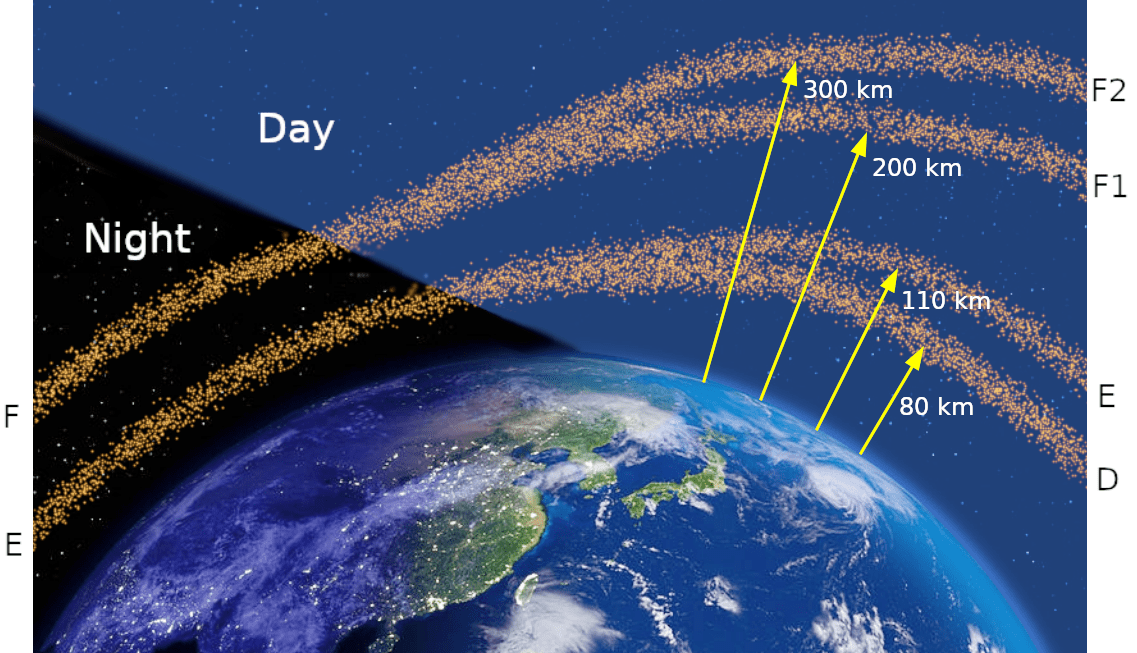
The D layer (60–90 km), which is responsible for the absorption of HF signals, de-ionizes rapidly after sunset and has not yet fully formed before sunrise.
In contrast, the F layer (F1: 150–200 km, F2: 200–400 km) maintains a high electron density, allowing efficient refraction of radio signals.
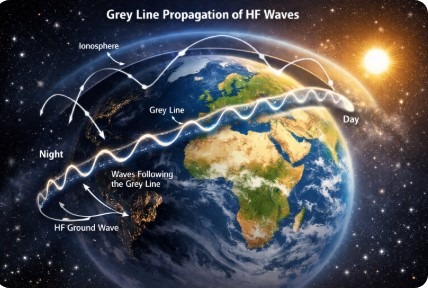
The combination of low absorption due to the decay of the D layer and the continued activity of the F layer creates a time window of approximately 10 to 45 minutes, which moves geographically as the Earth rotates.
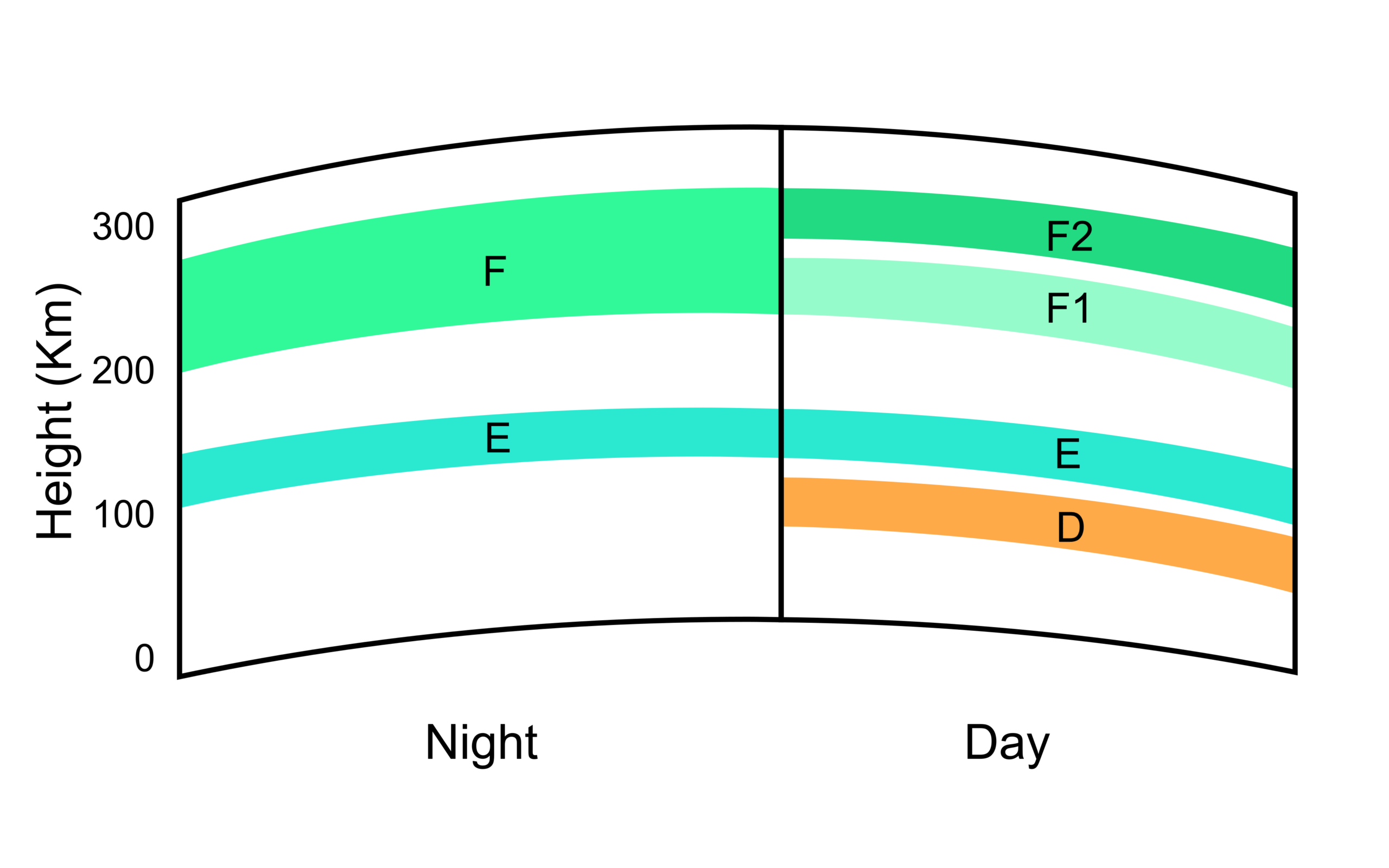
During this period, the signal-to-noise ratio (SNR) is increased, especially when both stations are located near or within the grey line zone.
Visualization of the Grey Line on Earth
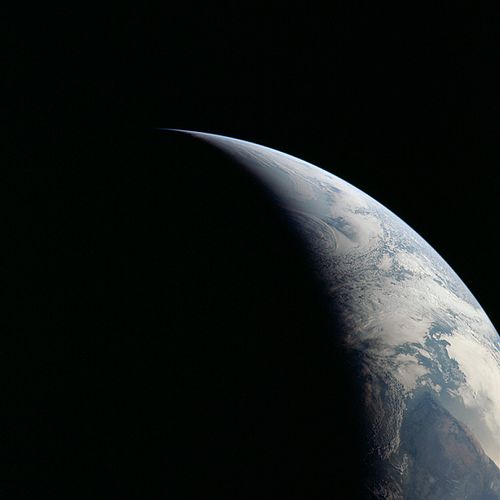
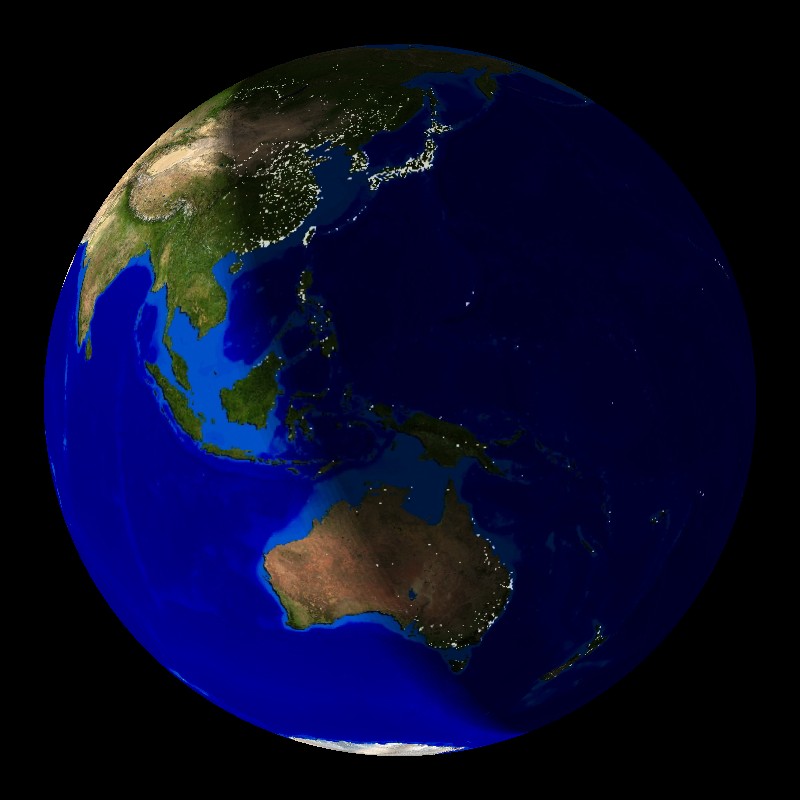
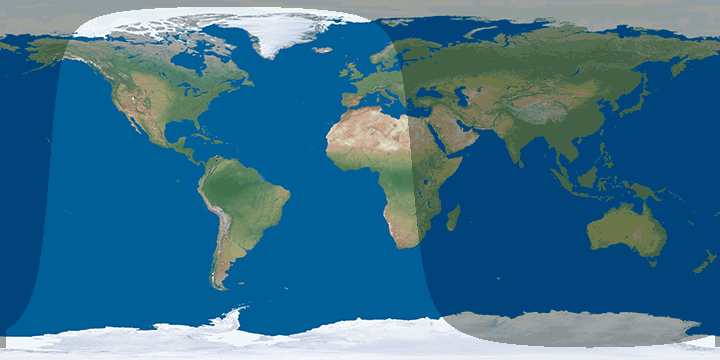
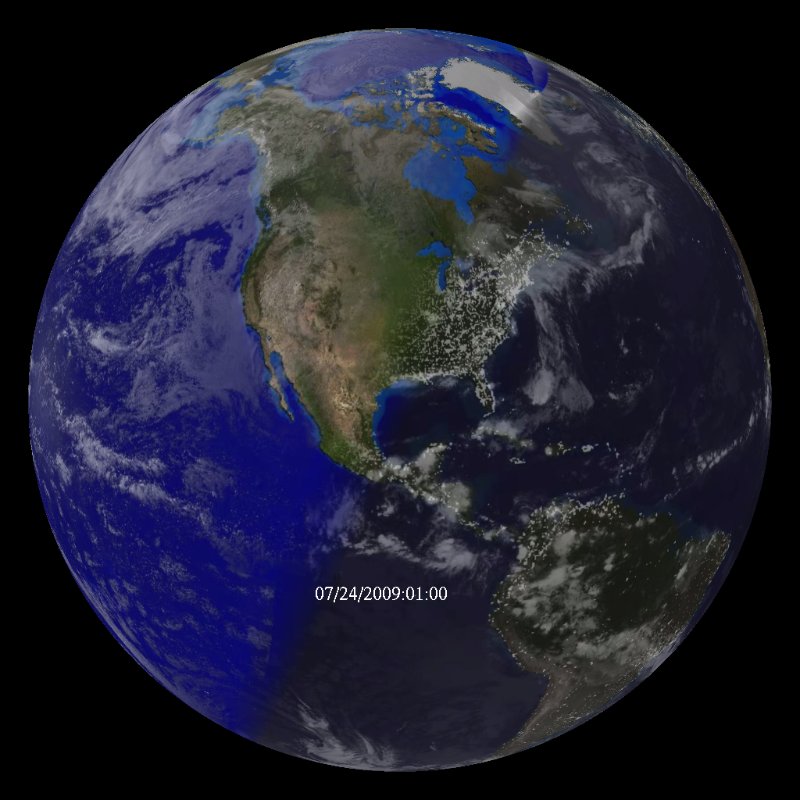
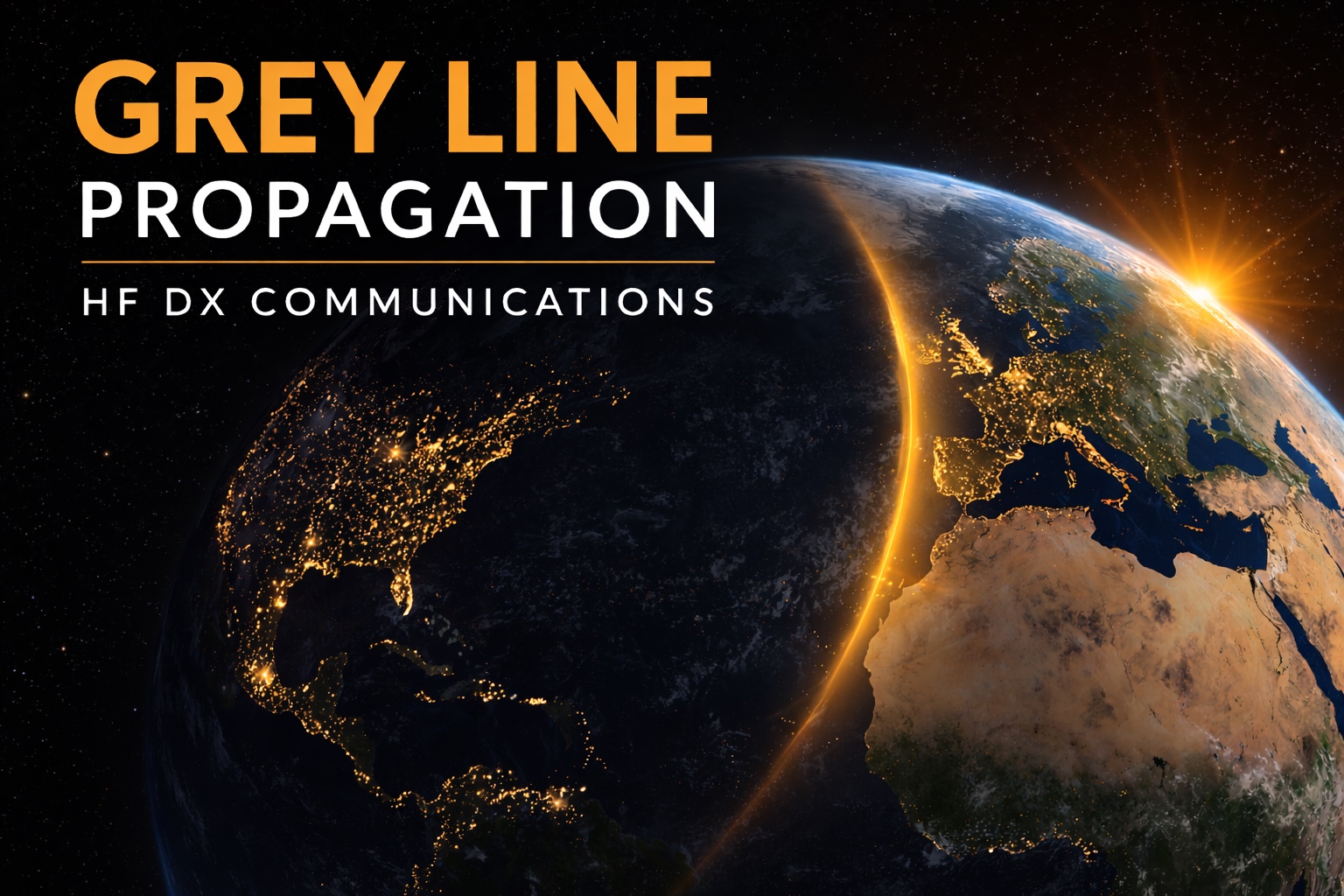
The line that separates the illuminated side of the Earth from the dark side is called the terminator, and it corresponds to what is commonly known as the grey line.
As the Earth rotates, this transition zone continuously moves around the planet. Regions located near this line experience ionospheric conditions that are transitioning between daytime and nighttime.
Under these conditions:
- the D layer dramatically reduces its absorption
- the F layer remains active
- HF propagation can become particularly efficient
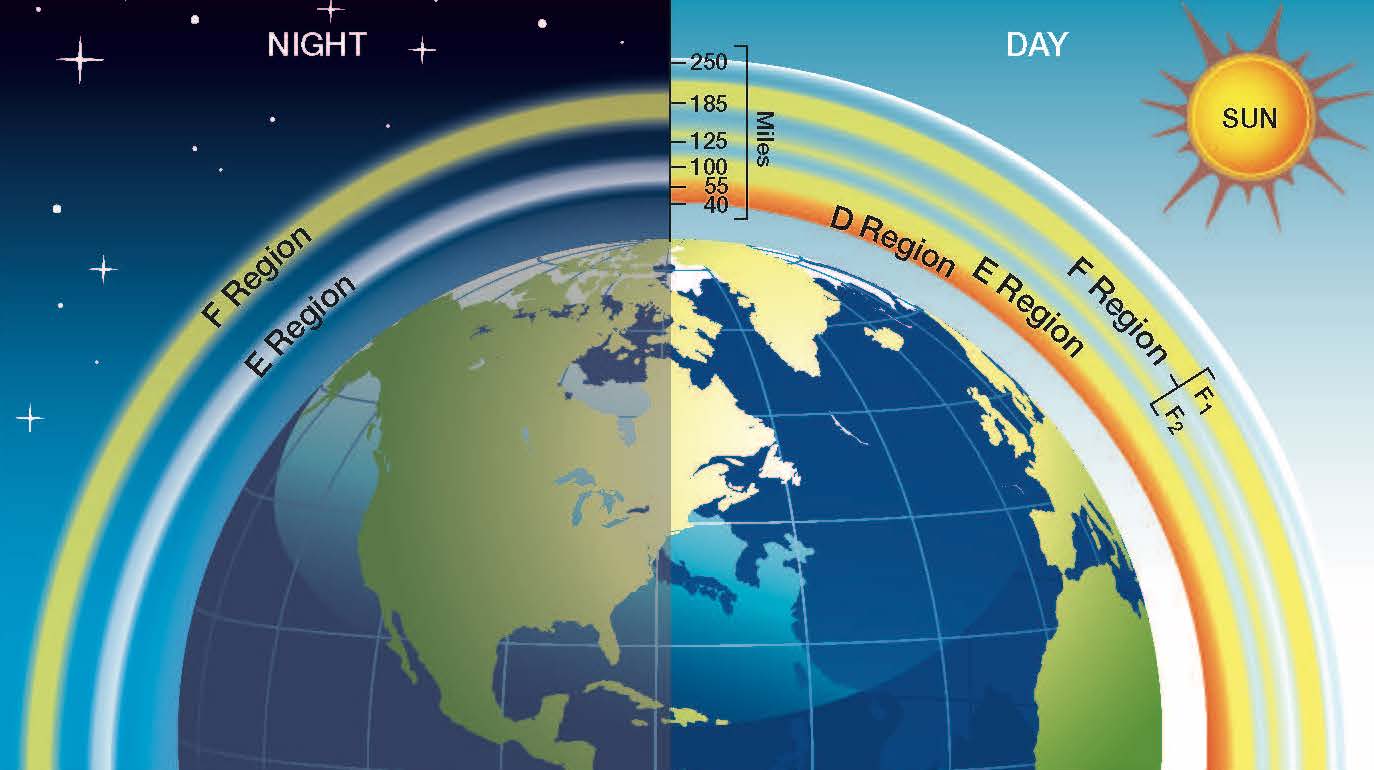
When two stations are simultaneously located near the grey line, the probability of establishing long distance DX communications increases significantly.
Frequencies and Bands Most Affected
Grey line propagation is most pronounced at lower HF frequencies (below 10 MHz), where the absorption caused by the D layer plays a critical role.
The 160 m and 80 m bands show the greatest improvement because D layer absorption increases inversely with frequency.
When two stations are simultaneously located near the grey line, the probability of establishing long distance DX communications increases significantly.
In other words, the D layer absorbs and attenuates lower frequencies more strongly. When the D layer weakens during grey line conditions, these frequencies benefit the most. At higher frequencies the phenomenon can still occur, but it becomes more dependent on solar activity and ionospheric conditions.
Geographic Dependence and Solar Activity
Geographically, the grey line phenomenon tends to appear more consistently at low and mid latitudes, while in polar regions it may be affected by geomagnetic disturbances and increased auroral absorption.
The effectiveness of grey line propagation, both for short path and long path communication, increases during periods of geomagnetic calm, when the Kp and A indices are low.
During the maximum of the 11 year solar cycle, increased solar ionizing radiation strengthens the F layer, allowing the grey line effect to extend even to higher HF bands.
During the solar minimum, however, the phenomenon is generally limited mainly to the lower bands.
Bands Most Affected
| Band | Grey Line Effect |
|---|---|
| 160 m | Very strong |
| 80 m | Strong |
| 40 m | Significant |
| 30 m | Moderate |
| 20 m | Occasional |
| >20 m | Limited, depends on the solar cycle |
Practical Importance for DX Communications
Grey line propagation is a recurring and relatively predictable ionospheric phenomenon, with significant practical value for shortwave radio communications. Understanding the underlying physical mechanisms allows operators to optimize the use of the HF spectrum, particularly for long distance DX communication and low power operation (QRP).
In simple terms, the grey line represents one of the most efficient forms of HF propagation, especially on the lower bands, where antennas with low radiation angles such as vertical antennas and Beverage receiving antennas can be effectively used. This occurs because the absorption of the D layer drops dramatically during the grey line period, while propagation conditions simultaneously allow low angle signal reflections, enabling very long distance radio coverage.
Correctly timing grey line conditions and understanding the behavior of the ionosphere can lead to DX contacts that would be impossible at other times of the day.
During the maximum of the 11 year solar cycle, increased solar ionizing radiation strengthens the F layer, allowing the grey line effect to extend even to higher HF bands.
During the solar minimum, however, the phenomenon is generally limited mainly to the lower bands.
Practical Tips for Exploiting the Grey Line
Amateur radio operators interested in DX communication often monitor sunrise and sunset times, both at their own station and at the location of the station they wish to contact. When both regions lie close to the grey line zone, propagation conditions can improve significantly.
The phenomenon is particularly noticeable on the lower HF bands, such as 160 m, 80 m, and 40 m, where D layer absorption strongly influences signal propagation.
To take better advantage of grey line conditions, operators often prefer low angle radiation antennas, such as vertical antennas for transmitting and Beverage antennas for receiving, which favor propagation over very long distances.
Finally, space weather conditions also play an important role.
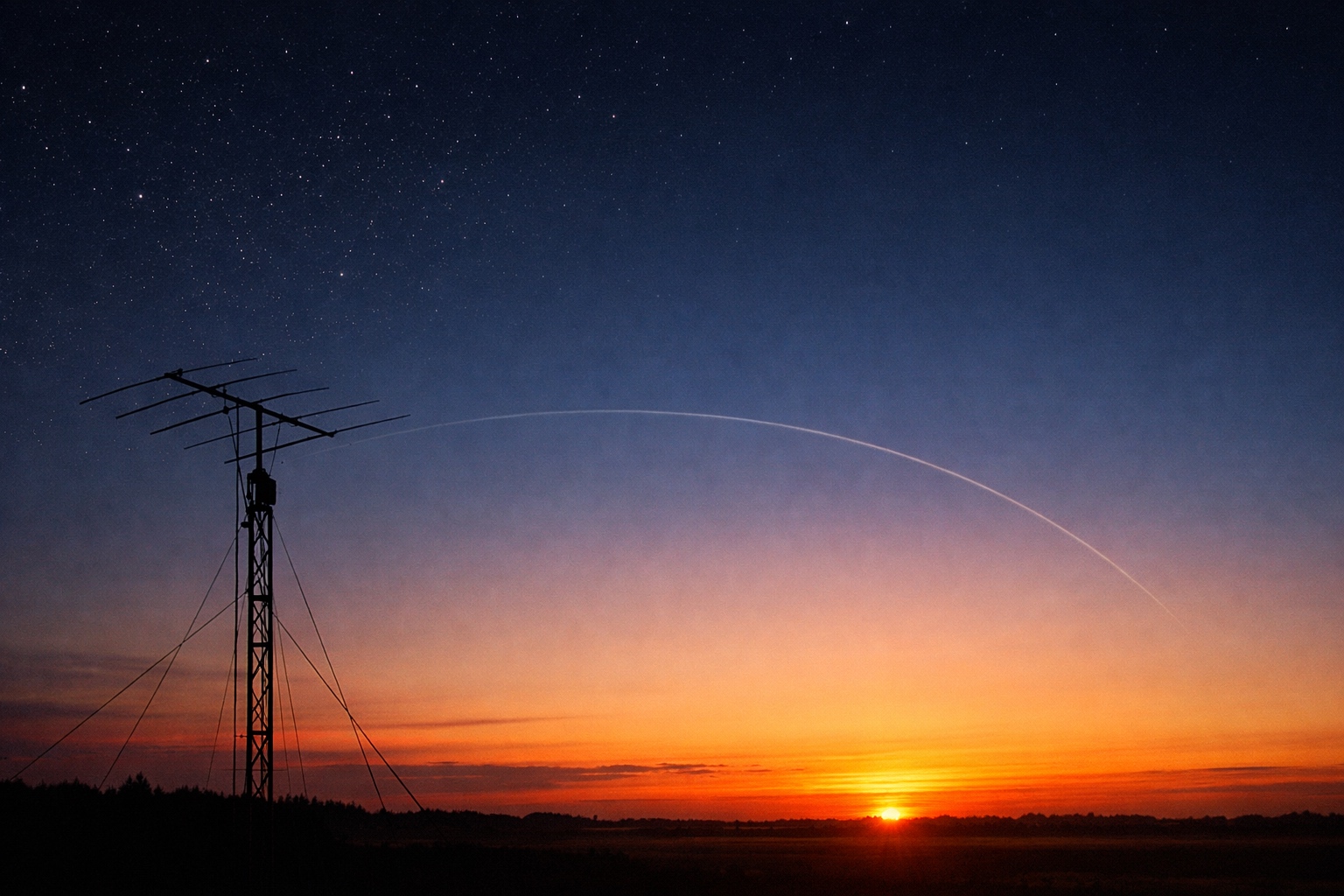
Periods of geomagnetic calm, characterized by low Kp and A index values, usually provide more stable and efficient propagation conditions.